







Degumming & Neutralization
Degumming
Degumming and neutralization are essential upstream refining operations designed to remove phosphatides, free fatty acids (FFA), trace metals, and other colloidal impurities from crude vegetable oils. These impurities negatively impact oil stability, increase refining losses, interfere with downstream bleaching and deodorization, and promote thermal degradation and color formation.
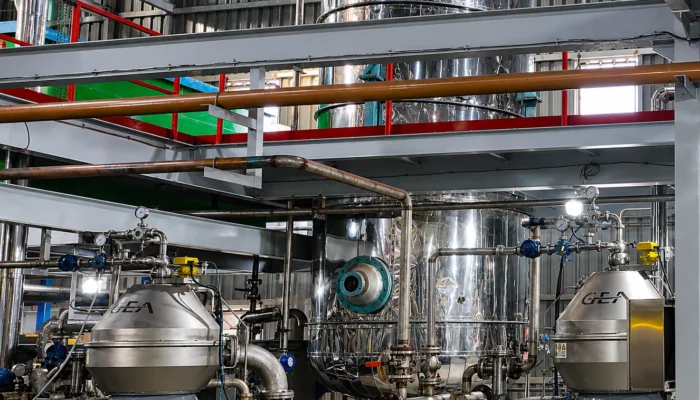
DVC’s degumming and neutralization systems are engineered for high separation efficiency, low oil loss, and stable continuous operation across a wide range of vegetable oils.

Process Selection Based on Crude Oil Characteristics
Process configuration is selected based on phosphatide composition, FFA level, metal content, and desired refined oil quality.

Low FFA, high phosphatide oils
- Water Degumming
- Alkali Neutralization
- Water Washing

High FFA Crude Oils
- Total Degumming (Acid + Alkali)
- Water Washing
Water Degumming – Unit Operation
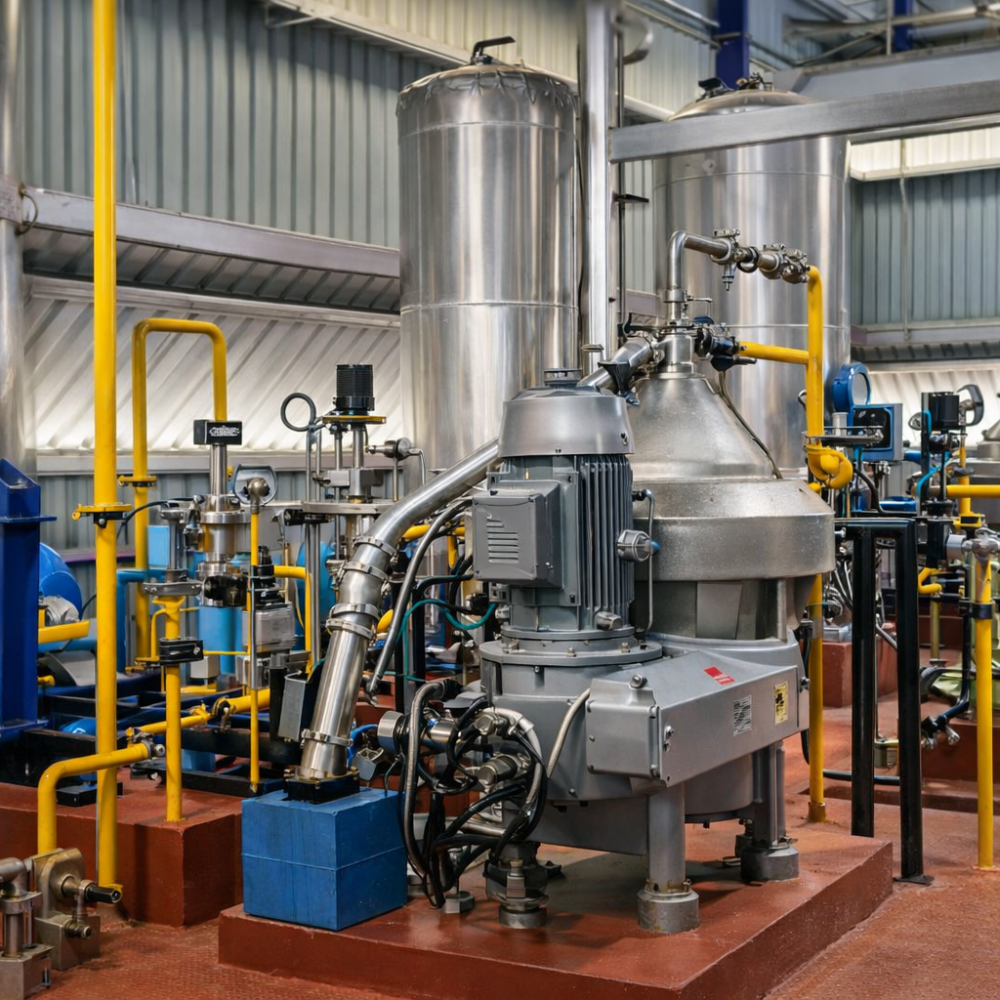
Water degumming process followed in case of oils such as soy & sunflower oil which contains higher levels of hydratable phospholipids which of prime importance for food & pharma industries.
Here in this process, controlled emulsion hydration of hydratable phospholipids by dosing equivalent amount of process water into the crude oil stream by optimized uniform distribution using efficient mixers followed by retention. Hydrated phosphatides lose oil solubility and form discrete agglomerates.
Key operations include:
Neutralization – Alkali Refining
Neutralization is performed by metered addition of caustic soda solution to acid-conditioned oil. Free fatty acids react with alkali to form soap stock, while residual phosphatides and trace metals are co-precipitated.
Process characteristics:
This stage significantly improves oil purity and prepares the oil for downstream bleaching and deodorization
Modified degumming processes
Total Degumming – High Gum & High FFA Oils
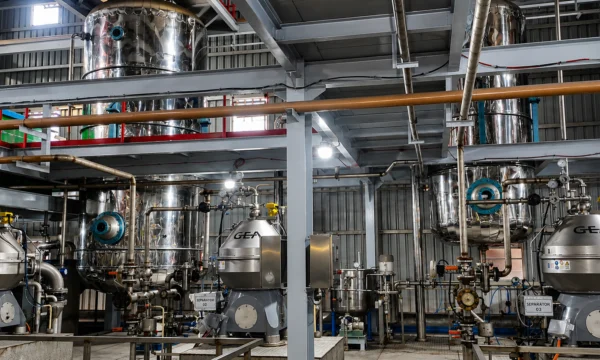
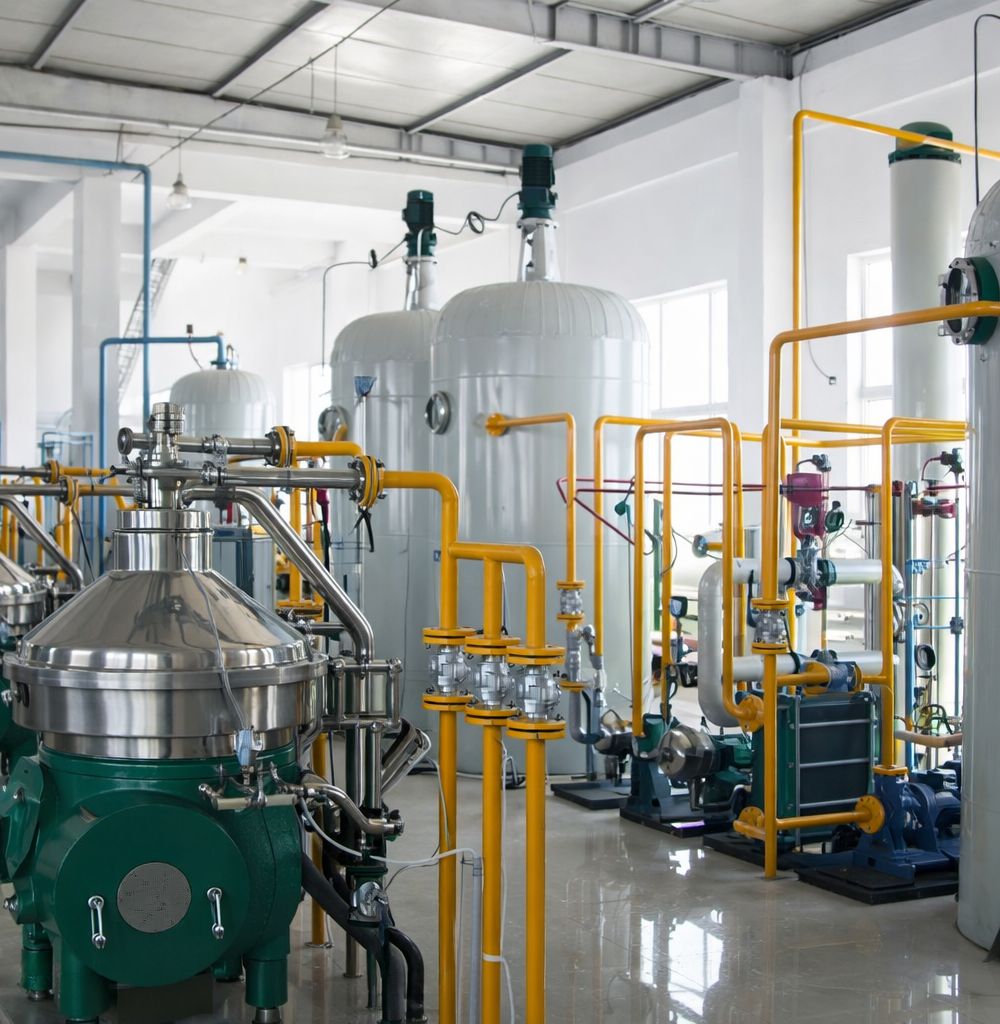
Total degumming is a combined chemical treatment process designed for oils with elevated phosphatide and FFA levels. Phosphoric or citric acid is first dispersed into the oil using a high-intensity mixer, followed by a controlled contact time to convert non-hydratable gums.
Subsequently, caustic lye is introduced to neutralize FFAs and destabilize remaining phospholipid complexes. The treated oil is retained for sufficient reaction time before high-efficiency centrifugal separation removes gums, soap stock, and associated impurities.